
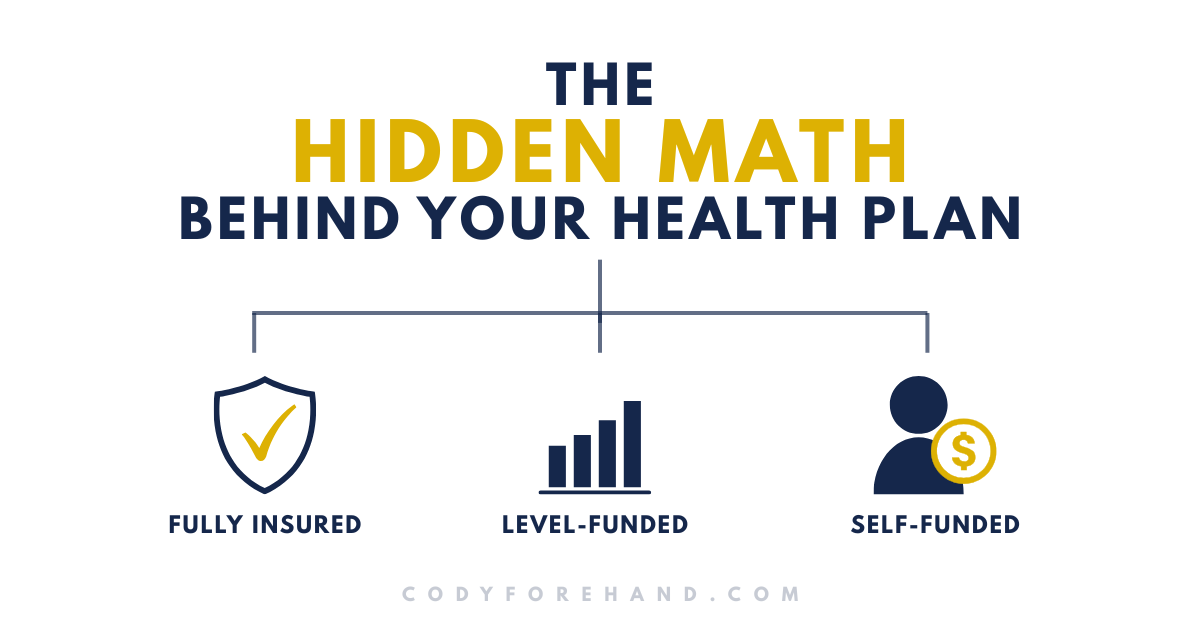
When employers evaluate health insurance options, they’re often presented with three choices:
- Fully Insured
- Level-Funded
- Self-Funded
At first glance, these can feel like interchangeable insurance terms, just different ways to pay for the same thing.
They’re not.
Choosing between these models is a strategic financial decision, one that directly impacts your company’s risk exposure, cash flow, transparency, and long-term cost trajectory.
For businesses in the 25–75 employee range, this decision can mean the difference between predictable, but rising, costs and a system that actually works in your favor.
Let’s break down what these structures really mean.
1. Fully Insured: Predictable, But Limited
A fully insured plan is the most traditional model.
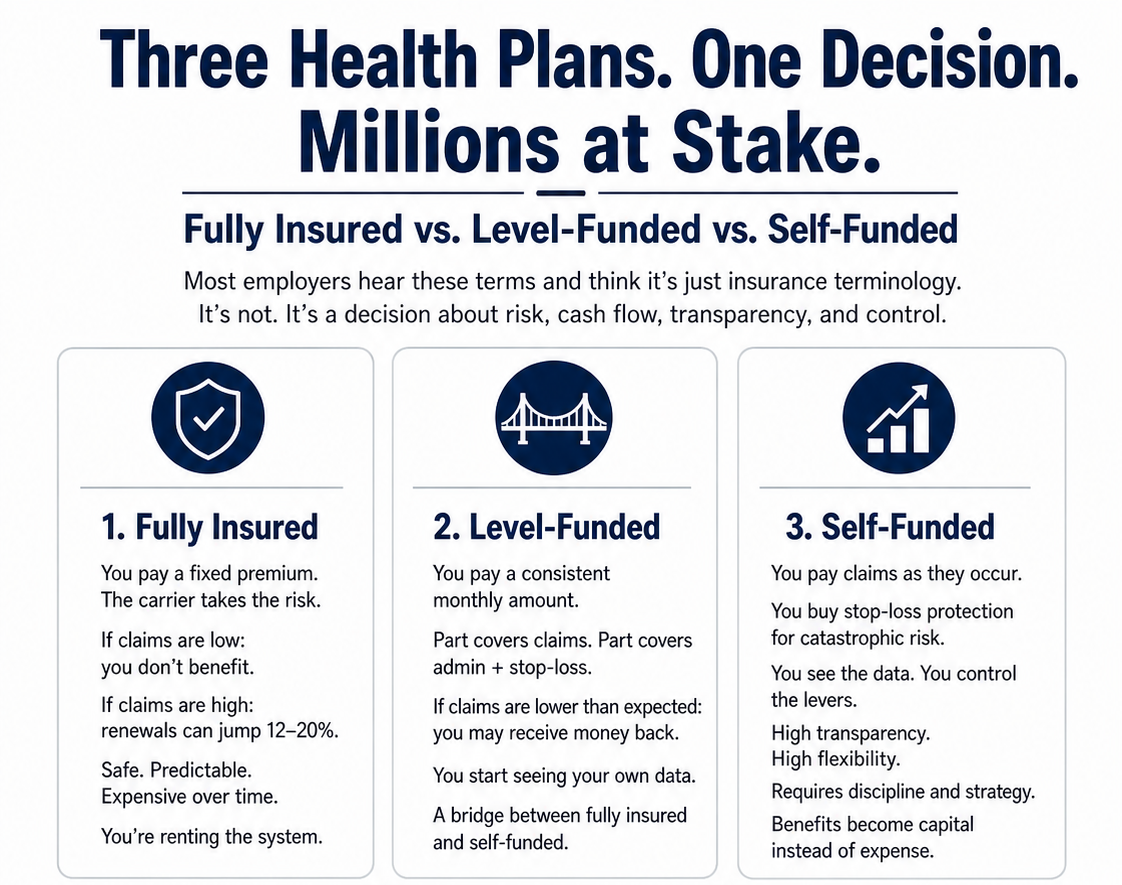
You pay a fixed monthly premium to an insurance carrier, and in return, the carrier assumes the financial risk of your employees’ healthcare claims.
On the surface, this feels safe:
- Your costs are predictable
- You’re protected from large, unexpected claims
But there’s a trade-off.
If your employees have a relatively healthy year and claims are low, you don’t share in the savings. The insurance company keeps the difference.
On the other hand, if claims are high, you’ll likely face renewal increases—often in the 12–20% range.
Over time, this creates a cycle where:
- You have limited visibility into what’s driving costs
- You have little control over plan design
- And your premiums continue to rise year after year
In many ways, you’re not building anything, you’re simply renting the system.
2. Level-Funded: A Strategic Middle Ground
Level-funded plans offer a hybrid approach.
Instead of paying a traditional premium, you pay a fixed monthly amount that is divided into three components:
- Claims funding
- Administrative costs
- Stop-loss insurance (protection against large claims)
Here’s where it gets interesting:
If your claims are lower than expected, you may receive a refund or surplus at the end of the year.
This introduces something most fully insured plans lack: financial alignment.
You also begin to gain access to claims data and insights, allowing you to better understand:
- Where your healthcare dollars are going
- What’s driving utilization
- Where opportunities exist to improve outcomes and reduce costs
For many employers, this model serves as a bridge, offering more control and potential savings without fully stepping into the responsibilities of self-funding.
It’s not uncommon for companies to see 8–15% savings in the first year simply by restructuring how their plan is funded, without reducing benefits.
3. Self-Funded: Control, Transparency, and Long-Term Strategy
In a self-funded plan, the employer takes on the responsibility of paying employee healthcare claims directly.
To manage risk, companies purchase stop-loss insurance, which protects against unexpectedly high individual or total claims.
This model offers the highest level of:
- Transparency – You see exactly where your money is going
- Flexibility – You can design plans that better fit your workforce
- Control – You’re no longer bound by one-size-fits-all carrier structures
But with that control comes responsibility.
Self-funding requires:
- A willingness to analyze and act on data
- A proactive approach to managing risk
- Strategic planning around plan design and employee engagement
For companies that approach it thoughtfully, this is where health benefits begin to shift from a fixed expense into a strategic asset.
The Biggest Misconception Employers Make
Most companies evaluate these options as if they sit on a spectrum between:
- Employer cost
- Employee burden
But that framing misses the bigger picture.
The structure of your health plan influences far more than just what you pay each month.
It determines whether:
- Employees delay or avoid care due to high deductibles
- Annual renewals feel unpredictable and frustrating
- HR teams become the middle point for ongoing dissatisfaction
—or—
- Your benefits package becomes a meaningful tool for recruitment and retention
- Employees feel supported and actually use their coverage effectively
- Costs become more predictable and manageable over time
Reframing the Goal
This isn’t about reducing benefits.
It’s about making your benefits work better for both your employees and your business.
The right structure can:
- Improve employee experience
- Increase financial efficiency
- Provide clarity in an otherwise opaque system
And most importantly, it can shift your approach from reacting to rising costs…
to strategically managing them.
Final Thought
If your company falls in the 25–75 employee range, this decision is more significant than it may initially appear.
Understanding how your plan is funded isn’t just an administrative detail, it’s a foundational business decision with long-term implications.
Taking the time to evaluate your current structure, and whether it truly aligns with your goals, can uncover opportunities that many employers overlook.