
There’s a certain kind of innovation that doesn’t announce itself.
It doesn’t come with hype.
It doesn’t look revolutionary at first glance.
In fact… people often resist it.
And yet, over time, it quietly reshapes how we live and do business.
Oklahoma has a history of producing exactly this kind of innovation.
The Ideas That Didn’t Look Like Much… At First
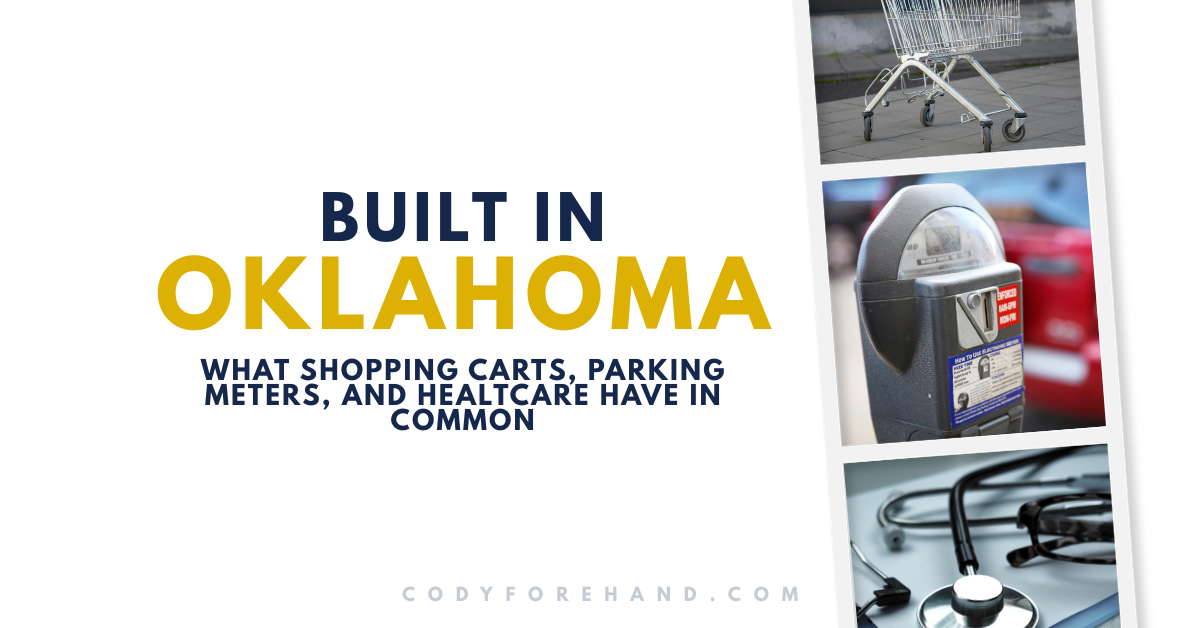
The Shopping Cart
When it was introduced in 1937, shoppers didn’t like it.
Some thought it made them look weak. Others thought it looked like a baby stroller.
Today? It’s impossible to imagine a grocery store without one.
The Parking Meter
When Oklahoma City introduced the first parking meter, people protested.
Paying to park felt unreasonable.
Now it’s simply part of how cities function.
Sonic Drive-In
“Don’t get out of your car—we’ll bring the food to you.”
At the time, it sounded unnecessary.
Now? It’s a model that defined an entire category of dining.
The Pattern
Each of these ideas shared a few things in common:
- They were simple
- They challenged the way things had always been done
- They were resisted early
- And ultimately… they made life easier
That last part is what matters.
Not complexity. Not novelty.
Clarity. Practicality. Alignment.
Healthcare Is Starting to Follow the Same Path
Recently, I had the opportunity to hear Keith Smith speak.
He’s the founder of Oklahoma Surgery Center, a group that has been at the forefront of price transparency and direct contracting in healthcare.
What they’ve built follows the same pattern.
At its core, direct contracting is straightforward:
- Clear, upfront pricing
- Direct relationships between employers and providers
- Fewer layers of unnecessary complexity
For a long time, this approach was viewed as niche… or even unrealistic.
Today, that’s changing.
From “Interesting Idea” to Practical Tool
What’s most exciting is not just the concept – it’s the application.
Direct contracting is no longer limited to large employers or isolated cases.
We’re now seeing it move down market.
For small and mid-sized employers, it’s becoming a practical tool that can be integrated into a broader benefits strategy.
When combined with networks, gap coverage, and thoughtful plan design, it allows employers to build programs that are:
- More cost-effective
- Easier for employees to actually use
- Better aligned between all parties involved
A Different Way to Think About Healthcare
For many business owners, healthcare has felt like a fixed expense – something to manage, but not truly control.
That mindset is starting to shift.
The employers we work with are beginning to ask better questions:
- Are we buying healthcare the same way we always have?
- Are there more efficient ways to structure this?
- Are our employees actually able to use the benefits we’re offering?
These are the kinds of questions that lead to better outcomes.
The Takeaway
The most impactful ideas don’t always look groundbreaking in the beginning.
Sometimes they look… simple.
But when they make sense—when they align incentives and improve real-world outcomes—they tend to stick.
Oklahoma has seen this before.
Healthcare may just be next.